
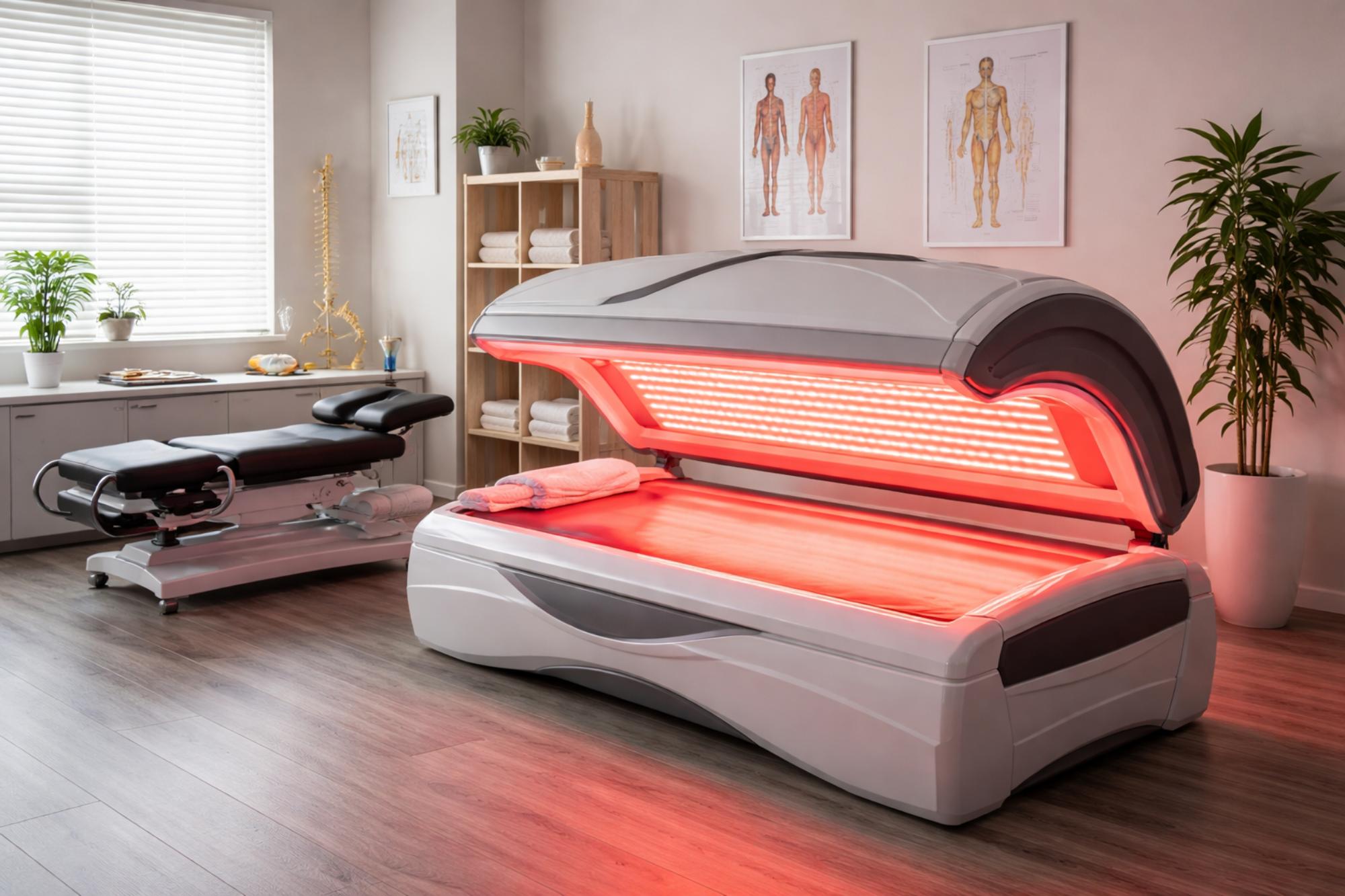
How Chiropractic Clinics Can Model Red Light Wellness Services
Many chiropractic clinics already focus on movement, mobility, and helping clients feel guided between visits. Because of that positioning, some clinics are exploring red light therapy as an added wellness service that fits naturally into their environment.
As awareness grows, more people are searching for services using everyday phrases like “red light therapy bed near me,” which can create additional discovery opportunities for clinics that offer a dedicated space for sessions.
This article walks through a realistic business scenario, not hype, showing how a chiropractic clinic could structure sessions, pricing, and utilization to understand potential return on investment while creating a more comfortable client experience.
Table of contents
- Why red light therapy fits a chiropractic setting
- Typical equipment investment range
- Common pricing models (real-life example)
- Expanded utilization & operations metrics
- Revenue example with utilization factor
- Payback timeline comparison
- What clinics usually worry about first
- Who this model tends to work best for
- Why adoption is accelerating
- Final thoughts
Typical equipment investment range
Clinics evaluating red light therapy typically compare systems based on capacity, footprint, and positioning. Commercial-grade options include:
- Red light therapy beds such as Prism Light Pod – $94,995 and Body Balance Premier RLT – $69,997. In a commercial context, these are often described as a full-body “red light bed” experience, designed to serve many sessions per day.
- Light wellness devices like Body Balance ApolloARC – $19,997 and Body Balance ApolloGLOW – $14,997
Because these systems serve many sessions daily, clinics analyze revenue per session and utilization more than purchase price alone.
Common pricing models
Imagine Sarah, an existing chiropractic client. After her appointment, she adds a 15-minute red light session. She relaxes in a calm, quiet room, listens to music, and leaves feeling refreshed. It becomes part of her weekly relaxation routine.
In real clinics, questions often come up early, such as “how often should you do red light therapy” and “how often can you use red light therapy.” Many clinics keep the answer simple and comfort-led: follow manufacturer guidance, start conservatively, observe how it feels, and build a sustainable rhythm that fits the person’s routine and goals. If someone has specific personal considerations, it’s wise to encourage them to speak with a qualified professional.
Some clients also explore red light sessions as part of their evening wind-down habits. While experiences vary, clinics often find that the calm environment, short session length, and consistent routine can make it easier for clients to stay engaged with a wellness routine.
- Single session: $50–$70
- 10-session package: discounted rate
- Membership add-on model
Clients often see this as a wellness experience rather than a clinical service, which may encourage repeat visits and typically sits outside insurance limitations, helping support cash-based revenue streams.
Expanded utilization & operational metrics
| Metric | Example |
|---|---|
| Session duration | 15–20 minutes |
| Sessions per hour capacity | 2-3 |
| Realistic daily sessions | 6–8 |
| Staff required | None during session |
| Staff involvement | Brief orientation only |
| Maintenance | Low; cleaning + room reset |
| Clinic days per month | 20 |
Business takeaway: A short-session service that runs without provider time may offer meaningful margin potential depending on utilization. You also do not need additional staff since your existing employee can handle the new service.
Most clinics place systems in a small dedicated wellness room, an underused service room, or a quiet corner converted into a wellness suite.
Revenue example with utilization factor
Using a conservative 60% utilization rate:
6 sessions × $60 × 20 days × 60% utilization = $4,320/month
Payback timeline comparison
| System | Cost | Session Price | Session Duration | Monthly Revenue (est.) | Utilization | Payback Estimate |
|---|---|---|---|---|---|---|
| Prism Light Pod | $94,995 | $65 | 20 min | $6,240 | 65% | 15–18 months |
| Body Balance ApolloGLOW | $14,997 | $40 | 15 min | $3,600 | 70% | 4–6 months |
These figures are illustrative examples and not guarantees. Actual results depend on demand, pricing, and clinic workflow.
What clinics usually worry about first
- Will clients actually book sessions?
- Will the equipment sit unused?
- Who explains it to clients?
- How do we introduce pricing without pushback?
These are common operational questions, and they are typically addressed through clear client education, front-desk scripting, and simple onboarding processes that fit into existing clinic flow.
Who this model tends to work best for
- Clinics with consistent client volume
- Practices already focused on movement & mobility
- Businesses looking to add non-insurance revenue
- Clinics with 40–80 sq ft of flexible space
Why adoption is accelerating
Clients today are seeking comfortable, lifestyle-focused ways to add structure to their wellness routines. Clinics that integrate light-based wellness services are positioning themselves for this shift.
Final thoughts
For clinics looking to evolve, this is about more than equipment. It’s about creating an environment where clients feel guided, where the clinic operates efficiently, and where new revenue streams align with wellness-focused service.
Where to go next
Book a commercial planning consultation
We’ll walk through your space, client flow, and service model.
Explore commercial wellness products
Planning guidance for clinics and commercial wellness spaces.
Note: Informational only. Financial examples are illustrative and not guarantees.
Disclaimer: This content is for informational and educational purposes only and is not intended as medical advice. The information shared reflects general wellness and lifestyle perspectives and should not be used to diagnose, treat, cure, or prevent any condition. References to potential benefits, timelines, or outcomes are general in nature and may vary from person to person. Always consult a qualified healthcare professional before making changes to your health or wellness routine.
Products and modalities discussed are intended for general wellness and lifestyle use only. Product use and installation are undertaken at the user’s discretion, and local codes, regulations, and requirements may vary. While we strive to keep information accurate and up to date, My Energy Flow makes no representations or warranties regarding completeness or applicability.

Reviewed by My Energy Flow



Leave a comment
This site is protected by hCaptcha and the hCaptcha Privacy Policy and Terms of Service apply.