
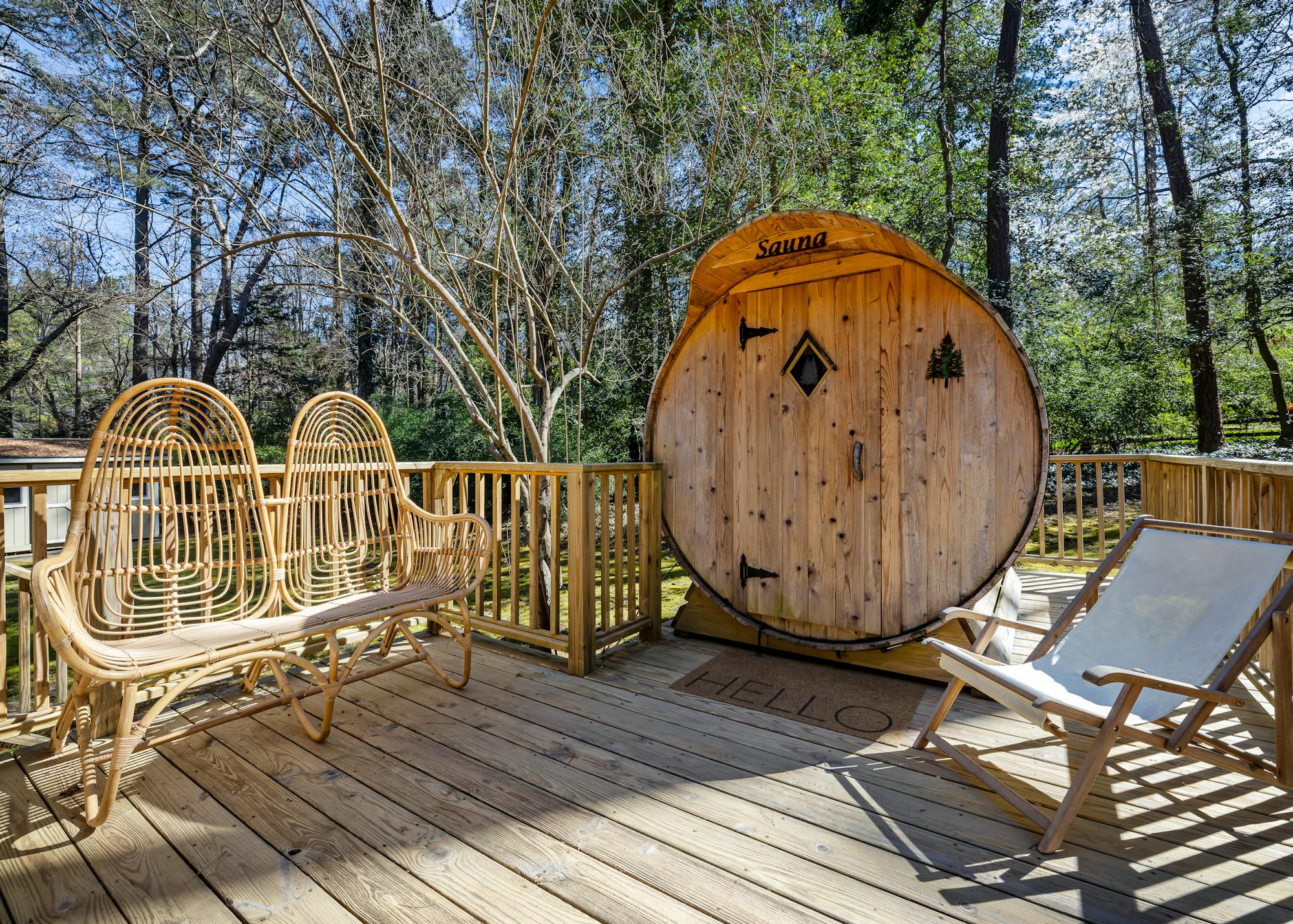
When people talk about outdoor sauna benefits, they’re often referring to the experience, routine, and environment a sauna creates at home.
Stepping into an outdoor sauna offers a calm and grounding experience that feels completely different from using a sauna indoors. The combination of warm, steady heat with fresh air just outside the door creates a simple ritual that is often used as part of a relaxation routine. Whether you’re using a traditional heater, wood-burning stove, or infrared setup, the outdoor sauna experience can be enjoyed year-round.
This guide walks you through the key reasons people choose outdoor saunas, how they fit into a calm and consistent routine, and what to consider when choosing between barrel, cabin, and modern outdoor sauna designs. You’ll also find links to deeper articles if you want to explore sauna rocks, different sauna types, or contemporary design ideas.

The Experience of Using an Outdoor Sauna
Outdoor saunas naturally create separation from indoor routines. The short walk outside, the cool air around you, and the quiet environment make the experience feel more intentional. Many people find they unwind faster in an outdoor setting because the contrast between the outdoor air and the warm interior is often associated with relaxation.
This setting also makes it easier to create a personal wellness ritual—some prefer morning sessions to prepare for the day, while others enjoy a quiet evening heat to unwind.
How Heat Fits Into Rest and Relaxation Routines
Heat creates a warm and comfortable environment. Many people find outdoor saunas a comfortable way to unwind after long workdays, workouts, or busy periods. For people using their sauna after exercise, our article on sauna after a workout explains how heat can fit into an after training routine.
Traditional heaters, wood-burning stoves, and infrared elements all offer their own style of warmth. Some people prefer the intense heat and steam control of stone-based heaters, while others enjoy the gentle warmth of infrared. If you want to compare heat styles more closely, you may enjoy reading our breakdown of modern sauna designs and how each heating type influences the overall feel of the session.
Why Outdoor Saunas Feel Mentally Calming
Being outside—even briefly—can feel calming. When you pair that with the stillness of a warm, quiet sauna interior, it becomes a natural way to pause and slow down. Many people find they disconnect more easily from screens, daily noise, or busy environments when their sauna is located outdoors rather than inside the home.
Outdoor sauna benefits can vary depending on how you use the space and what feels comfortable for you.
Outdoor saunas also invite small rituals: lighting a pathway, enjoying the quiet around you, or stepping outside to cool down between rounds of heat. These simple moments help create a deeper sense of presence, which is why outdoor saunas often become a favorite part of people’s weekly routines.
Choosing Between Barrel, Cabin, and Modern Outdoor Saunas
Outdoor saunas come in several layouts, each offering a different feel. If you're comparing shapes, airflow, capacity, or overall design, you’ll find helpful insights in our guide covering outdoor sauna types. Barrel saunas naturally support balanced airflow with their curved structure, cabin saunas offer more height and a room-like feel, while modern glass-front saunas combine clean lines with spacious views.
If you enjoy classic Scandinavian design or want a compact footprint, barrel saunas are a great fit. If you value extra room, headspace, or larger seating areas, cabin saunas might be the better choice. For people seeking contemporary aesthetics, practical energy use, or panoramic windows, modern styles provide a beautiful blend of function and design.

Understanding Heat Profiles and Sauna Rocks
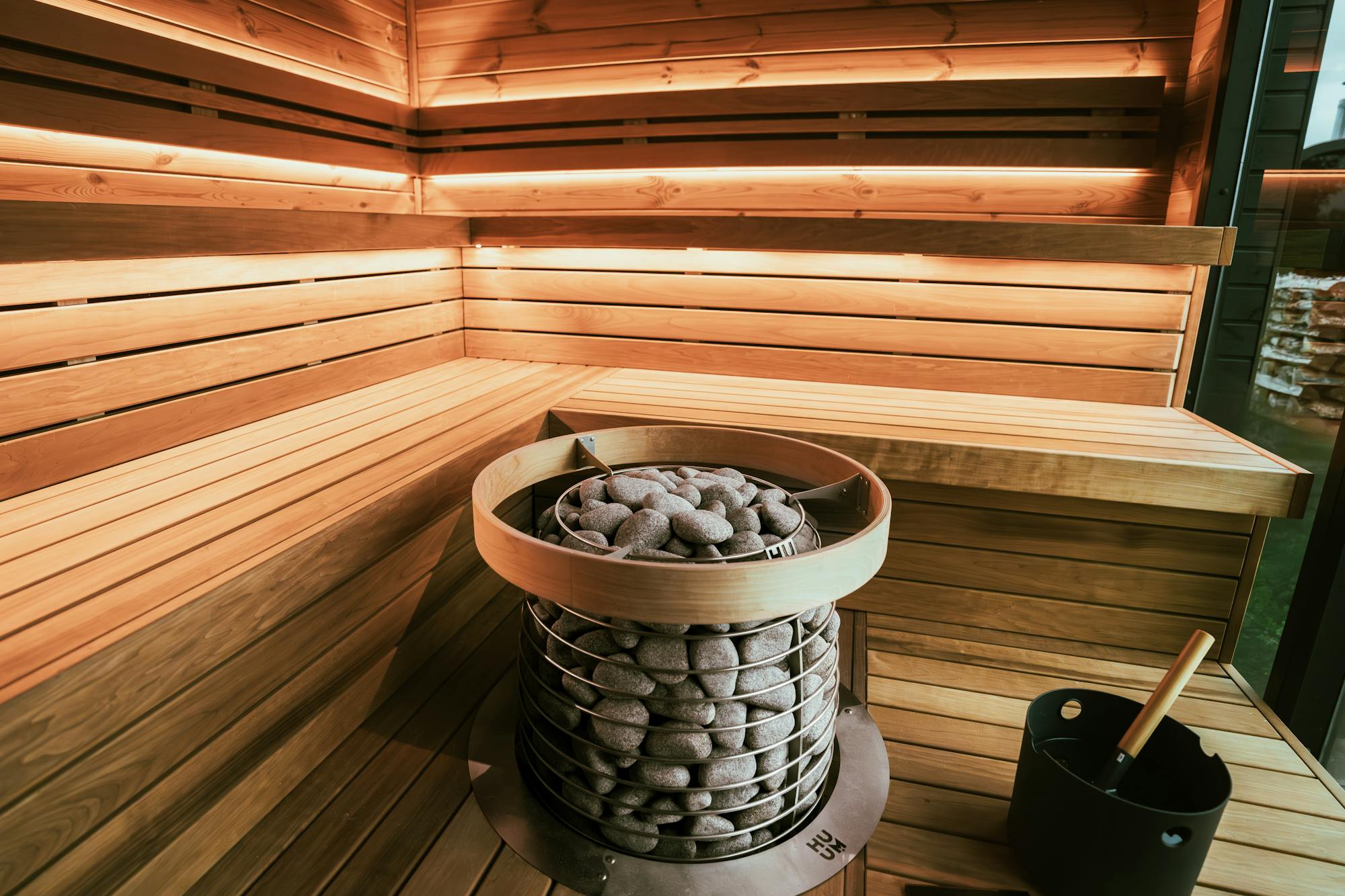
Outdoor saunas that use stone-based heaters allow you to control steam and humidity, which can noticeably change the feel of your session. Stone quality affects how heat is stored, released, and maintained throughout the session.
If you're installing a traditional heater, our guide on the best rocks for a sauna explains how stone density, durability, and heat retention can influence how the heater operates. Lava rock, basalt, and certain igneous stones each behave differently, and choosing the right set can help create more consistent heat and safer steam pours.
Seasonal Enjoyment and Cold-Weather Contrast
Outdoor saunas are particularly enjoyable in colder months. The sharp contrast between cold air and warm interior creates a refreshing cycle that many people enjoy. Stepping outside for a moment between rounds can make the relaxation experience feel more complete and help the routine feel more comfortable.
In warmer months, sunrise and sunset sessions often become part of a calm morning or evening routine. Because outdoor saunas are weather-protected structures, they can be used year-round regardless of the climate, making them a reliable wellness feature for any backyard.
Placement, Footprint, and Layout
Outdoor saunas can be placed on patios, decks, gardens, or beside cold plunge areas. Many people choose a spot with privacy, shade, or a scenic view. Modern designs with full glass fronts, like those found in our Barrel Sauna Collection and Cabin Sauna Collection, work beautifully in open outdoor settings.
When choosing a layout, consider interior bench depth, heater placement, window style, and whether you prefer a compact or spacious setup. For inspiration on design styles and contemporary layouts, explore our article on modern sauna designs.
Integrating an Outdoor Sauna Into Your Weekly Routine
If you’re new to sauna use, start with shorter sessions and increase gradually based on comfort. Many people begin with 10–15 minutes, then take a short cool-down break before re-entering. Consistency matters more than intensity—two or three sessions per week can already feel like a relaxing part of the week.
The quiet distance from the home environment makes this easier to turn into a habit. For people who enjoy using the sauna after exercise, our workout-focused guide covers practical timing and routine suggestions.
Explore Outdoor Sauna Designs
If you’d like to compare barrel, cabin, traditional, or infrared styles, you can explore collections that include various layouts and sizes:
- Barrel Sauna Collection
- Cabin Sauna Collection
- Traditional Sauna Collection
- Infrared Sauna Collection
Outdoor saunas offer warmth, calm, and a natural retreat just steps from your home. Whether you're beginning with a compact barrel sauna or exploring a larger modern structure, the experience can add a meaningful sense of calm to everyday life.



Leave a comment
This site is protected by hCaptcha and the hCaptcha Privacy Policy and Terms of Service apply.