

Sauna Heater Buying Guide: Electric vs Wood vs Infrared
Choosing the right sauna heater starts with the sauna room itself. Room volume, insulation, glass or masonry surfaces, power source, controls, and installation requirements all affect which heater is a good fit. This guide compares electric sauna heaters and wood-burning sauna stoves, then explains sizing, heat-up time, sauna stones, controls, installation, and operating cost.
If you are ready to compare available models, browse our Sauna Heaters collection. For electric-only options, explore our Electric Sauna Heaters.

Table of Contents
- Why Your Sauna Heater Choice Matters
- Sauna Heater Types at a Glance
- Electric Sauna Heaters
- Wood Burning Sauna Stoves
- Sauna Heater Sizing: kW, Room Volume & Heat Loss
- Matching Your Heater to Sauna Type & Location
- Heater Sizing Basics: kW vs Sauna Volume
- Heat-Up Time, Steam, and Experience
- Controls, Installation & Safety Considerations
- Operating Costs & Value Over Time
- Bringing It All Together — Next Steps
For a complete overview of everything that goes into choosing a home sauna — including size, location, wood types, and accessories — you may also want to read our Best Home Sauna Buying Guide .
Why Your Sauna Heater Choice Matters
When most people start shopping for a sauna, they think first about the cabin style — barrel, cabin, or indoor corner unit. But in practice, the sauna heater has just as much impact on your experience as the structure itself. The heater influences:
- How quickly your sauna heats up and how often you’ll realistically use it.
- What the air feels like — soft and steamy, dry and intense, or steady, consistent warmth.
- Where you can install the sauna — on-grid vs off-grid, indoor vs outdoor.
- What your ongoing energy or wood costs look like over months and years.
A small indoor 1–2 person sauna in a condo will likely benefit most from a compact electric sauna heater. A forest cabin or lakeside retreat might be better served by a classic wood burning sauna stove. And an urban wellness space with clients coming and going may lean toward an infrared cabin for quick warm-up and lower surface temperatures.
This guide will help you narrow that decision down step by step.
Sauna Heater Types at a Glance
For a traditional sauna, the main choice is between an electric sauna heater and a wood-burning sauna stove. Both heat sauna stones and allow water to be ladled onto the heated stones to create steam, but the way they are powered, controlled, installed, and maintained is very different.
- Electric sauna heaters – Powered by electricity and available with built-in or separate controls depending on the model. Many are designed for home, outdoor, and professional sauna installations.
- Wood-burning sauna stoves – Heated with firewood and typically require a chimney or flue, combustion air, floor protection, and model-specific safety clearances.
Infrared saunas use a different heating system. Instead of heating stones with a traditional sauna heater, infrared cabins use heating panels to deliver radiant heat. We cover that difference separately in our Infrared vs Traditional Sauna Guide.
Electric Sauna Heaters: Convenience and Control

For most modern homes, an electric sauna heater is the default choice. It’s clean, simple to operate, and doesn’t require storing or handling firewood. You flip a switch or use a control panel, the elements warm the stones, and your sauna is ready to use once it reaches temperature.
Where Electric Heaters Make the Most Sense
- Indoor saunas in homes, condos, or finished basements.
- Outdoor saunas where electrical service is readily available.
- Users who want set-and-forget timers, remote controls, or Wi-Fi integration.
- Those who prefer a low-maintenance option with predictable performance.
In terms of power, most residential electric sauna heaters range from roughly 4.5 kW to 9 kW or more, depending on sauna volume. For example, a compact 1–2 person sauna may be well served by a 4.5–6 kW heater, while a 4–6 person room often benefits from a 7–9 kW model.
Example Electric Sauna Heater Families
Electric heater families can cover very different room sizes, stone capacities, and control systems. Manufacturer sizing charts are more useful than choosing a heater by person capacity alone.
- Harvia KIP – A compact wall-mounted heater family available in 3.0, 4.5, 6.0, and 8.0 kW versions. Depending on the model, controls may be built into the heater or provided through a separate Harvia control system.
- Harvia Cilindro – A floor-standing, high-stone-capacity heater family. Current technical documentation includes models from 6.0 to 10.5 kW, with approved sauna-room ranges extending from about 141 to 636 cubic feet depending on the model.
- HUUM DROP – A wall-mounted electric heater available in 4.5, 6, 7.5, and 9 kW versions at 240V. Across the family, HUUM lists recommended room sizes from about 106 to 460 cubic feet, depending on heater output.
These heaters differ in footprint, stone capacity, control requirements, electrical load, and approved sauna volume. Two heaters with the same kW rating are not automatically interchangeable, so always compare the specifications for the exact model and sauna room.
You can browse available Harvia Sauna Heaters or compare the wider selection in our Electric Sauna Heaters collection.
Pros and Considerations for Electric Heaters
Benefits:
- Simple daily use — no firewood, no ash, no chimney.
- Precise control of temperature and session length.
- Compatible with timers and smart controls in many models.
- Ideal for urban homes and indoor installations.
Things to keep in mind:
- Most larger heaters require 240V electrical service.
- Installation may require a licensed electrician and dedicated circuit.
- Outdoor units may need additional weather protection and proper enclosures.
For a focused breakdown of electrical considerations, you can explore our Sauna Electrical Requirements Guide .
Wood Burning Sauna Stoves: Classic Heat and Ritual

A wood burning sauna stove is the traditional choice for cabins, lakeside retreats, and off-grid saunas. Instead of using electricity, you build a fire in the firebox, which heats the stones above. Many people love the smell of the wood, the sound of the fire, and the steam created when water hits the hot stones.
Where Wood Burning Stoves Make the Most Sense
- Outdoor saunas in rural or natural settings.
- Properties where it is easy to store and handle firewood.
- Users who enjoy the ritual of lighting and tending a fire.
- Off-grid cabins or locations with limited electrical capacity.
Example Wood Burning Sauna Stove Models
Here are a few wood-burning models often used in outdoor barrel and cabin saunas:
- Narvi Kuru – A compact yet capable wood stove suited to small and medium outdoor saunas, known for robust heat and a simple, functional design.
- Harvia M3 – A classic wood-burning heater commonly seen in backyard saunas and cabins, designed for even heating and a traditional Finnish sauna feel.
- Narvi Inari – A stylish option with a focus on even radiant heat and a balanced steam experience, ideal for those who want both heat consistency and visual appeal.
These stoves usually require a chimney, proper clearances from walls and benches, and attention to local building and fire codes. For many owners, the firelight, aroma, and steam are worth the extra steps.
If you’re leaning toward an outdoor wood-powered experience, you may want to explore our outdoor sauna collection and Barrel Sauna Buying Guide .
Pros and Considerations for Wood Burning Stoves
Benefits:
- Authentic sauna atmosphere with a live fire.
- Excellent steam and heat retention with the right stone mass.
- Can be used in off-grid locations without electrical service.
Things to keep in mind:
- Requires a chimney or flue and careful installation.
- Needs proper ventilation and clearances for safety.
- Requires ongoing wood supply and ash clean-out.
How Infrared Sauna Heating Is Different
Infrared cabins do not use a traditional stone-based sauna heater. They use infrared heating panels that deliver radiant heat while operating at lower air temperatures than a traditional Finnish-style sauna. Because there is no heated stone mass, the installation, controls, warm-up behavior, and sauna experience are different from electric or wood-burning sauna heaters.
If you are deciding between these two heating styles, see our Infrared vs Traditional Sauna Guide. You can also browse our Infrared Saunas separately.
Matching Your Heater to Sauna Type & Location
The right heater depends not just on preference, but also on the type of sauna you’re installing and where it will live.
Indoor Saunas
For most indoor saunas — whether it’s a 1–2 person, 3–4 person, or larger — an electric heater is the most practical choice. Electric models like the Harvia Cilindro series or HUUM Drop 6 are well suited to:
- Finished basements and wellness rooms.
- Primary homes where ease of use is key.
- Spaces where you want clean, simple operation and precise control.
You can browse indoor saunas and size-specific options like 2 person saunas or 4 person saunas to see how different heater pairings look in real cabins.
Outdoor Barrel and Cabin Saunas
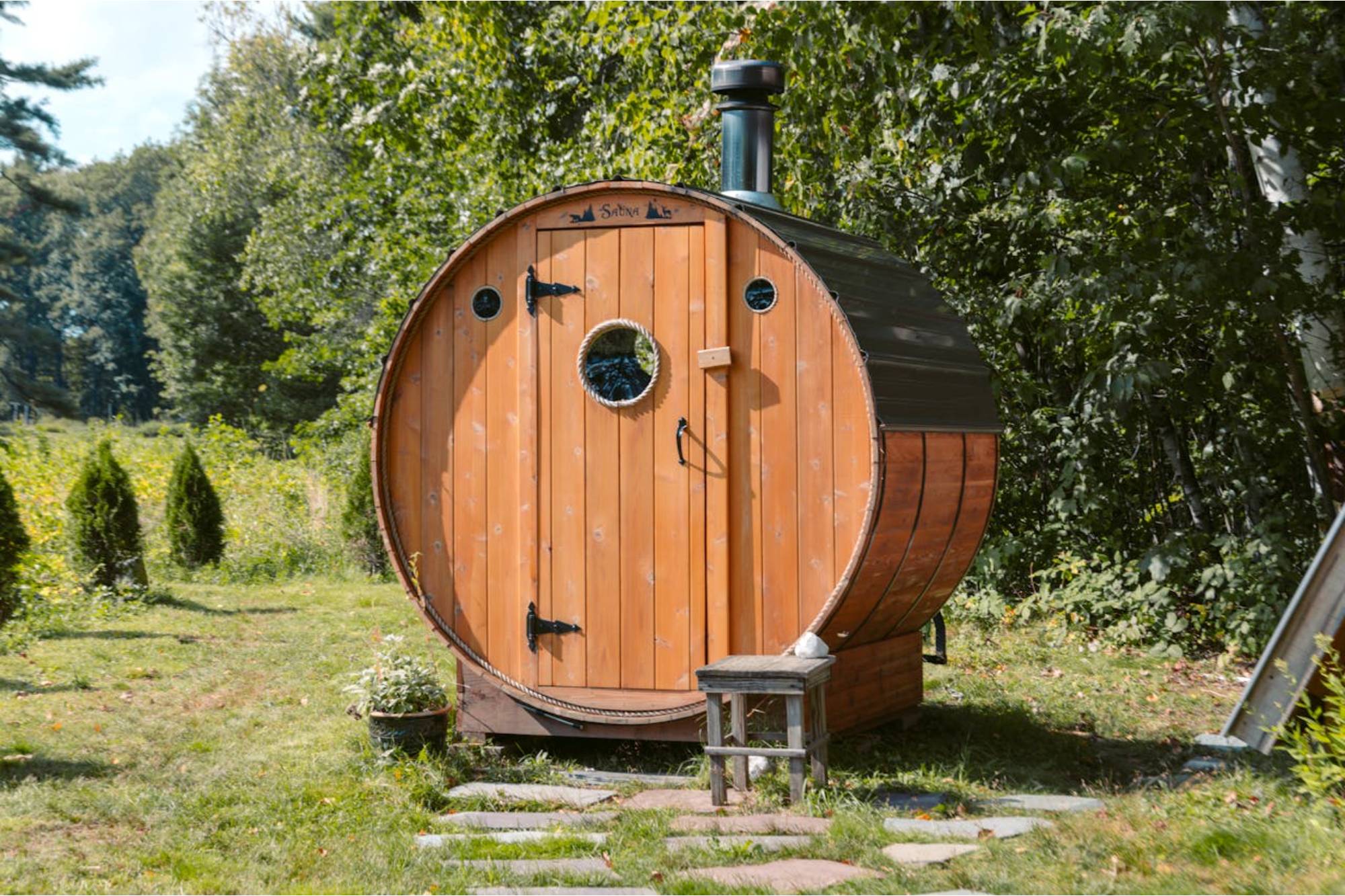
For outdoor saunas — especially barrel saunas and cabin-style structures — you can often choose between a robust electric heater or a wood burning sauna stove. Wood-burning stoves like the Narvi Kuru, Harvia M3, or Narvi Inari pair beautifully with outdoor units, especially in natural settings where firelight and chimney smoke feel at home.
If you want outdoor convenience with less hands-on fire management, an outdoor-rated electric heater combined with a well-insulated structure can also support consistent heat. Our barrel saunas and outdoor saunas for home are a good starting point for exploring both options.
Infrared Cabins
If you are primarily drawn to lower air temperatures and a different style of heat, you might lean toward an infrared cabin rather than a traditional heater. In that case, you’ll be choosing between panel layouts, panel materials, and wattage rather than between a stone-based heater and a stove. You can explore our infrared sauna collection for options that use advanced HeatWave-style panels.
Sauna Heater Sizing: kW, Room Volume, and Heat Loss
A sauna heater should be sized to the cubic volume of the sauna room, not simply the number of people it can seat. Start by multiplying the interior length × width × height to calculate room volume, then compare that number with the manufacturer's approved range for the heater.
Room construction also matters. Large areas of glass, brick, tile, concrete, or other poorly insulated surfaces absorb more heat and can increase the effective room volume. Log-wall saunas may also require additional heater capacity. Different manufacturers use slightly different sizing rules, so the sizing chart for the exact heater should always be the final reference.
Real-World Sauna Heater Sizing Examples
- HUUM DROP 6 – 6 kW: HUUM lists a recommended 240V sauna-room range of approximately 177–318 ft³.
- HUUM DROP 9 – 9 kW: HUUM lists approximately 283–460 ft³ at 240V.
- Harvia Cilindro 6 kW: current Harvia technical documentation lists approximately 141–294 ft³ for the referenced 6 kW model.
- Harvia Cilindro 9 kW: the referenced 9 kW model is listed for approximately 141–494 ft³.
These examples also show why kW alone does not tell the full story. Heater design, stone capacity, manufacturer testing, room construction, and installation requirements all matter.
Before ordering, confirm the heater's minimum and maximum room volume, required clearances, voltage, controls, and electrical requirements for your exact installation.
Sauna Heater Controls and Installation

Electric Sauna Heater Controls
Electric sauna heaters do not all use the same control system. Some models have a timer and thermostat built into the heater, while others require a separate control panel, power unit, and temperature sensor. Select systems also support Wi-Fi or app-based control.
For example, the Harvia KIP family includes both built-in-control and separate-control versions, while the Harvia Cilindro models covered in the current manual use compatible external control systems. Always confirm that the heater, controller, sensor, and power unit are designed to work together.
Electrical Installation
Many residential electric sauna heaters use 240V service, but voltage alone is not enough to plan an installation. Amperage, breaker size, conductor size, heater output, control system, and local electrical code must all be considered for the exact model.
As an example, Harvia's KIP documentation lists different current and wire requirements for its 6 kW and 8 kW models even though both operate at 240V. This is why heater wiring should be based on the manufacturer's installation manual rather than a general sauna rule.
Electric sauna heaters covered by the manufacturer documentation we reviewed require permanent electrical installation and should be connected by a qualified or licensed electrician in accordance with applicable codes.
Wood-Burning Stove Installation
Wood-burning sauna stoves have a different set of installation requirements. Planning can include the chimney or flue, chimney draft, combustion air, floor protection, clearances from combustible materials, and ventilation. These requirements vary by stove and installation.
For a deeper breakdown of voltage, circuits, breaker sizing, wiring, controls, and sauna electrical planning, see our Sauna Electrical Requirements Guide.
Safety and Ongoing Care
Regardless of heater type, it’s important to:
- Follow manufacturer installation and operating instructions.
- Maintain proper clearances around the heater and chimney.
- Check stones periodically and replace damaged pieces as needed.
- Keep controls, wiring, and vents in good condition.
You can explore practical tips for cleaning, upkeep, and long-term care in our Sauna Maintenance Guide and Sauna FAQ .
Operating Costs & Value Over Time
While the upfront cost of a sauna heater is important, it’s helpful to also think about ongoing operating costs and how often you plan to use your sauna.
Factors that influence operating cost include:
- The heater kW rating (for electric units).
- Session length and how many times per week you use the sauna.
- Local electricity rates and, for wood, the cost or availability of firewood.
- Insulation quality and whether the sauna is indoors or outdoors.
A well-sized electric heater paired with a properly insulated sauna can be surprisingly efficient for regular home use. Wood-burning stoves can be cost-effective when you have ready access to firewood and value the ritual of fire building as part of the experience.
For a more detailed look at how heater choice fits into overall ownership cost, you can review our Sauna Cost and ROI Guide .
How to Choose the Best Sauna Heater for Your Setup

The best sauna heater is the one that matches your actual room and installation. Before choosing a model, confirm these five points:
- Heater type: Decide whether an electric or wood-burning heater makes more sense for the location and how you want to operate the sauna.
- Adjusted sauna volume: Calculate the room's cubic volume and account for glass, masonry, log walls, or other surfaces that increase heat demand.
- Approved heater range: Choose a model whose manufacturer-rated room range fits the adjusted sauna volume.
- Installation requirements: Confirm electrical service or chimney requirements, ventilation, clearances, controls, and floor protection before ordering.
- Daily use: Consider how much control, automation, stone capacity, maintenance, and hands-on operation you want.
To compare available heater types and brands, start with our Sauna Heaters collection. If you already know you want electric heat, browse Electric Sauna Heaters. For Harvia models specifically, explore our Harvia Sauna Heaters collection.
If you are planning the electrical side of the installation, use our Sauna Electrical Requirements Guide before finalizing a heater.
You can also continue your research with our Best Wood for Saunas Guide, Sauna Accessories Guide, or Indoor vs Outdoor Sauna Guide.
If you are unsure which heater fits your sauna room, contact My Energy Flow with the interior dimensions, sauna construction, location, and available power. That gives us the information needed to narrow the heater options more accurately.
Editorial note: My Energy Flow publishes content for general educational and product-research purposes. We aim to keep product specifications, technical information and referenced research accurate and current, but details may change over time. Always confirm current manufacturer documentation and applicable local requirements before purchasing, installing or using a product.
Health and wellness information is general in nature and is not a substitute for personalized medical advice from a qualified healthcare professional.



Leave a comment
This site is protected by hCaptcha and the hCaptcha Privacy Policy and Terms of Service apply.