
Best Wood for Sauna: Cedar vs Hemlock vs Aspen vs Spruce
Choosing the right wood for a sauna influences several aspects of the sauna experience — how the room feels under heat, how it handles humidity over time, and how it looks the first time you step inside.
Cedar is the most widely used wood for sauna builds — prized for its natural aroma, heat resistance, and traditional feel. Hemlock and aspen are strong alternatives for modern, low-scent interiors. Spruce is the traditional choice in Nordic sauna culture. The right wood depends on your heat style (dry vs steam), where your sauna will be placed (indoor vs outdoor), and the interior aesthetic you want.
If you're still deciding between infrared and traditional heat before choosing your sauna wood, start with Infrared vs Traditional Sauna.
In this guide, we compare the four most common types of wood for sauna environments — cedar, hemlock, aspen, and spruce — with real-world considerations for indoor and outdoor placement, steam use, maintenance, and longevity. We'll also cover how heater pairing, ventilation, and sauna stones affect the overall experience.

Table of Contents
- Which wood for sauna is right for you? Quick guide
- What to consider when choosing wood for a sauna
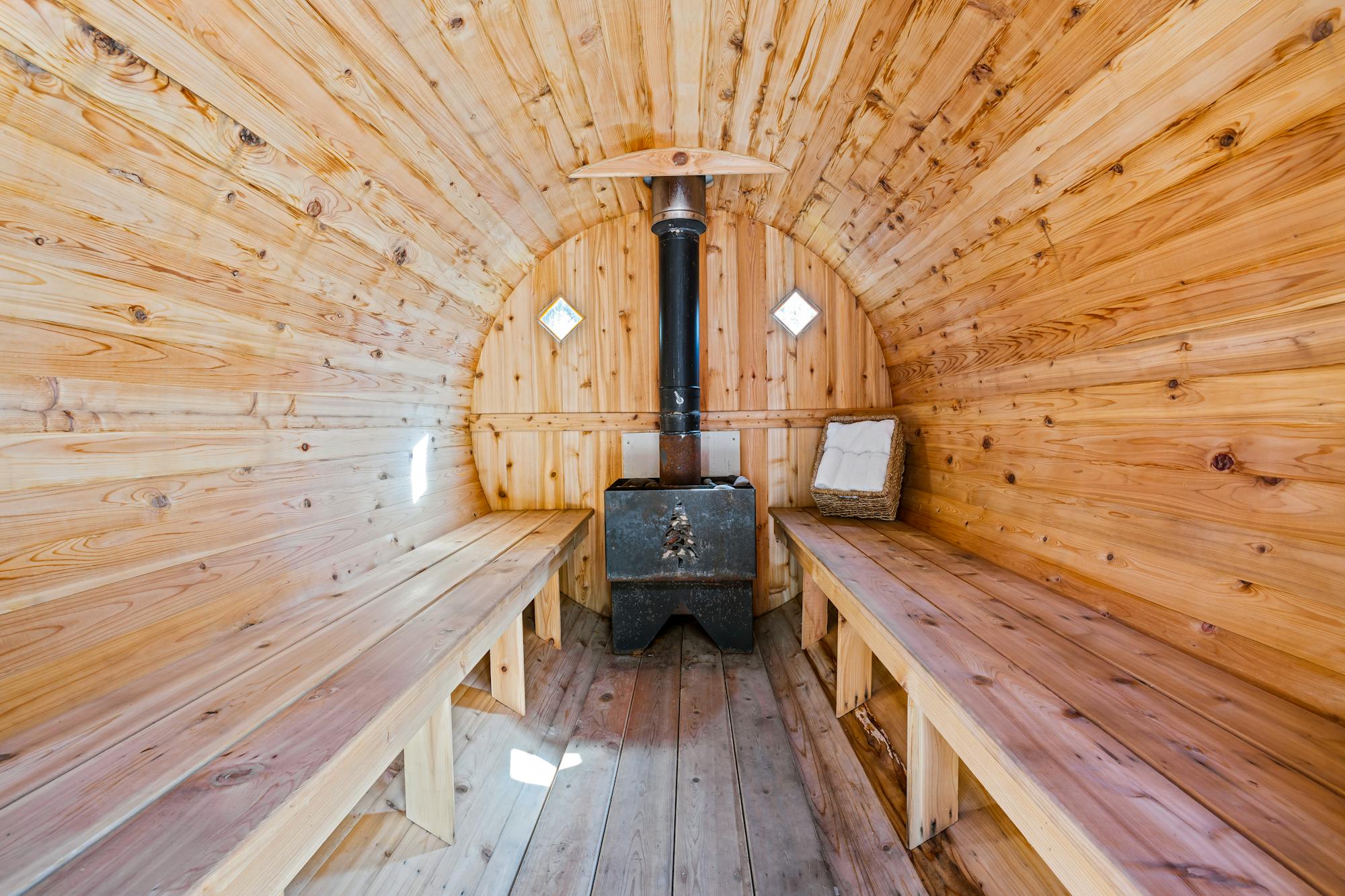
- Cedar: a widely used wood for sauna builds
- Hemlock: a top wood for sauna interiors with low aroma
- Aspen: a bright, minimal wood for sauna spaces
- Cedar vs hemlock vs aspen vs spruce: how to choose
- Spruce: traditional wood for sauna builds and outdoor use
- Sauna stones and wood: how they shape the heat experience
- Indoor vs outdoor wood sauna: what changes outside
- Maintenance + longevity: keeping your wood sauna beautiful
- Buying checklist: what to confirm before you purchase
- Frequently asked questions: wood for sauna
- Next steps: browse sauna types and sizes
Which wood for sauna is right for you? Quick guide
If you want the fastest “yes/no” answer, start here. Then we’ll break down the why — because the best wood on paper isn’t always the best wood for your space, your routine, and how you plan to use heat and steam.
| Best for… | Recommended wood | Why it fits |
|---|---|---|
| Classic sauna experience + warm aroma | Cedar sauna | The most popular cedar for sauna builds — signature scent, strong sauna identity, naturally resilient when cared for well |
| Modern, clean interior + low aroma | Hemlock | Uniform look, understated feel, great for indoor designs where you want a “spa minimal” vibe |
| Bright, soft, subtle aesthetic | Aspen | Light tone, gentle presence, popular for those who prefer minimal scent |
| Nordic tradition + practical build options | Spruce | Common in Scandinavian saunas; can be excellent with proper build quality and finishing |
| Outdoor use (any wood) | Depends on construction + protection | Outdoor performance is driven as much by roofline, ventilation, cladding, and maintenance as by wood species |
Want help choosing the sauna type before you pick the wood? Start with our main guide: Best Home Sauna Buying Guide. If you’re deciding between infrared and traditional heat, read: Infrared vs Traditional Sauna.
What to consider when choosing wood for a sauna
A wood sauna is a high-demand environment: repeated heat cycles, periods of dryness, occasional steam bursts (if you're using a traditional heater), plus skin contact and everyday wear on benches and backrests.
Here are the five factors that actually separate one sauna wood from another in daily use:
-
Heat behavior: Low-resin softwoods like cedar, hemlock, aspen, and spruce all
stay comfortable on bench surfaces at traditional sauna temperatures of
150°F–195°F (65°C–90°C). The difference between them is not heat tolerance —
it's how they look and smell as they age. - Aroma intensity: A cedar sauna has a recognizable scent. Hemlock and aspen are typically more neutral. If you’re sensitive to strong fragrance, this can matter a lot.
-
Moisture + steam tolerance: When water hits hot stones, interior humidity spikes
sharply and briefly. All four woods handle this well in a properly ventilated
sauna — the risk isn't the wood species, it's inadequate airflow that keeps
moisture trapped between sessions. - Visual tone: Cedar’s warmth, hemlock’s uniformity, aspen’s brightness, spruce’s classic look — these are as much “design” decisions as material decisions.
- Indoor vs outdoor exposure: Outdoor saunas face temperature swings, precipitation, sun exposure, and higher humidity. Outdoor performance is a construction + maintenance story, not just a wood species story.
One note: you’ll often see people talk about “the best wood” as if it’s universal. In practice, the best choice is the one that matches how you’ll use your sauna (dry heat vs frequent steam), where it will live (indoors vs outdoors), and the interior feel you want to step into.

A quick “feel test” you can use
Imagine your first 30 seconds inside the sauna:
- Do you want a distinctive sauna aroma that immediately signals “classic sauna”? Cedar sauna interiors tend to deliver that.
- Do you want a quiet, spa-like minimal interior with low scent and a modern look? Hemlock often fits.
- Do you want a bright, soft, airy interior aesthetic? Aspen is a strong candidate.
Cedar: a suitable for choice for sauna builds
Cedar is the most recognized sauna wood in North America — warm reddish tones,
a distinctive natural aroma, and an interior that signals traditional sauna
culture the moment you step inside. When buyers search for cedar wood for sauna
builds, they're typically after this combination: warmth, scent, and a look that
feels definitively "sauna."

What cedar tends to do well
- Creates an unmistakable sauna identity: the scent + look immediately reads “sauna.”
- Warm visual tone: cedar’s reddish hues feel cozy and premium in both barrel and cabin formats.
- Great for traditional sauna rituals: especially if you enjoy occasional steam and a “classic heat” environment.
What to watch for with a cedar sauna
- Aroma intensity: if you prefer a neutral interior, cedar may feel “too present.” (Some people love this; some don’t.)
- Patina over time: all sauna woods evolve. Cedar can deepen in tone, especially with heat cycles and UV exposure.
- Quality matters: thickness, joinery, ventilation, and bench construction often matter more than wood species alone.
If you’re pairing cedar with traditional heat, your heater choice matters too. For a deeper heater breakdown, read our: Sauna Heater Buying Guide.
Ready to explore cedar sauna options? Browse our Traditional Saunas collection to see cedar-built models by size and format.
Hemlock: a top wood for sauna interiors with low aroma
Hemlock is often chosen for a modern, uniform aesthetic. If cedar is “classic cabin warmth,” hemlock is “clean spa calm.” For indoor builds — especially where the sauna is part of a larger design concept (bathroom, wellness room, home gym) — hemlock can blend beautifully.

Why many buyers choose hemlock
- Low aroma: ideal if you want minimal scent and a quieter sensory environment.
- Uniform visual tone: tends to look consistent, which feels high-end in modern interiors.
- Pairs well with glass + lighting: hemlock can make LED lighting, windows, and clean lines feel intentional rather than busy.
Hemlock: best-fit scenarios
- Indoor sauna installations where the sauna is part of a finished living space
- Design-forward builds (spa minimal, Scandinavian modern, bright neutral bathrooms)
- People who want the sauna to feel “calm” rather than “cabin”
If you’re still deciding whether your sauna belongs indoors or outdoors, use this guide: Indoor vs Outdoor Sauna.
Aspen: a bright, minimal wood for sauna spaces
Aspen is loved for its bright, clean look and understated presence. If cedar is warm and aromatic, and hemlock is clean and uniform, aspen often feels bright and soft — a lighter aesthetic that many people associate with a modern Nordic-inspired sauna environment.

Why aspen works well
- Bright interior tone: makes the sauna feel airy and spacious, especially in smaller footprints.
- Minimal scent: a softer sensory profile for those who don’t want a strong wood aroma.
- Design flexibility: pairs well with glass fronts, clean lines, and contemporary interiors.
As a practical choice
Aspen is often selected for indoor saunas, particularly where you want a lighter, calmer aesthetic. As with any wood sauna, longevity depends on: ventilation, how you manage humidity, and basic care (more on that below).
Sauna Collection
Explore Our Sauna Collection
Discover a curated collection of indoor and outdoor saunas designed for comfort, performance, and long-term wellness. Compare different styles to find the one that fits your space and lifestyle.
Explore SaunasCedar vs hemlock vs aspen vs spruce: how to choose the right sauna wood
Every wood on this list performs well in a sauna environment when the build quality is right. The real question isn't which wood is technically superior — it's which wood is right for how you use your sauna, where it lives, and what you want to feel when you step inside. Here's how they stack up across the factors that actually matter.
Cedar vs hemlock sauna: aroma and atmosphere
This is the comparison most buyers face first — and the deciding factor is almost always scent. Cedar produces a warm, distinctive aroma that intensifies with heat. For many people, that smell is the sauna experience. It's immediately recognizable, deeply associated with traditional sauna culture, and part of the reason cedar remains the most popular wood for sauna builds in North America.
Hemlock is the opposite. It's nearly scentless, which makes it the preferred wood for sauna interiors in modern wellness spaces, spa-inspired bathrooms, and home gyms where the sauna needs to feel clean and minimal rather than rustic. Hemlock's uniform grain also tends to look more consistent panel-to-panel — which matters in design-forward spaces where you want the wood to recede rather than dominate.
Choose cedar if you want the full traditional sauna sensory experience — warmth, aroma, and a look that immediately reads "classic sauna." Choose hemlock if you want a quieter, more neutral interior where scent is minimal and the aesthetic is modern.
Cedar vs aspen sauna: warmth vs brightness
Where cedar runs warm and rich — reddish tones, visible grain, strong presence — aspen runs cool and light. Aspen has a pale, almost white tone that makes smaller sauna footprints feel more open and airy. It's a softer aesthetic, often described as "Scandinavian minimal" — clean lines, light wood, calm atmosphere.
Both woods are low-resin and stay comfortable to the touch on benches and backrests even at traditional sauna temperatures of 150°F–195°F (65°C–90°C). The difference is purely visual and sensory: cedar creates a warm, enveloping cave-like feel; aspen creates a bright, open, almost meditative space.
Choose cedar if you want a cozy, warm-toned interior with strong sauna identity. Choose aspen if you want a light, airy aesthetic with minimal scent and a calm, modern feel.
Hemlock vs cedar sauna: which holds up better over time?
Both woods are well-suited to sauna environments when properly ventilated and maintained. Cedar has a slight natural advantage in moisture resistance due to its oils — which also contribute to its scent. Those same oils can fade with heavy steam use over time, which is why some cedar sauna owners notice the aroma diminishing after years of frequent use. This is normal and expected, not a flaw.
Hemlock is denser than cedar and holds its appearance consistently over time — it doesn't patina as dramatically, which is either an advantage or a disadvantage depending on what you want from your sauna's aging process. Cedar develops character; hemlock stays consistent.
In terms of longevity, the build matters more than the species. A well-ventilated hemlock sauna will outlast a poorly ventilated cedar one every time. Focus on the construction quality first — wood species is secondary.
Spruce vs cedar and hemlock: the Nordic benchmark
Spruce is the wood that defined the sauna before cedar became the North American standard. In Finland — where the sauna tradition runs deepest and the Finnish Sauna Society has codified sauna culture for over a century — spruce and pine have been the default interior materials for generations. Not because they are exotic or premium, but because they work: good thermal behavior, comfortable to the touch, and widely available across Northern Europe.
Nordic spruce sauna wood has a pale, neutral tone similar to aspen, with a mild resinous scent that softens significantly after the first few heat cycles. It performs well in both dry and steam sauna environments and is particularly common in traditional outdoor sauna builds where a classic Scandinavian aesthetic is the goal.
Choose spruce if you want an authentic Nordic sauna aesthetic, a neutral low-scent interior, or a traditional outdoor build. It is a completely legitimate choice that has stood the test of centuries — not a budget compromise.
Side-by-side: the honest comparison
| Factor | Cedar | Hemlock | Aspen | Spruce |
|---|---|---|---|---|
| Scent | Strong, distinctive | Minimal | Minimal | Mild, fades with use |
| Visual tone | Warm reddish-brown | Light, uniform | Pale, bright | Pale, neutral |
| Touch at heat | Smooth, comfortable | Smooth, consistent | Soft, comfortable | Smooth, comfortable |
| Best setting | Traditional, cabin, outdoor | Modern indoor, spa | Modern indoor, minimal | Nordic, outdoor, traditional |
| Longevity | Strong with maintenance | Consistent over time | Good with ventilation | Strong in quality builds |
| Moisture handling | Good — natural oils help | Good — density helps | Good with ventilation | Good in well-built saunas |
| Ideal for | Classic sauna experience | Clean, quiet aesthetic | Light, airy aesthetic | Authentic Nordic builds |
The bottom line: there is no objectively "best" wood for a sauna. There is only the best wood for your sauna — based on where it lives, how you use it, and what you want to feel every time the door closes behind you. Use this comparison to narrow it down, then trust the build quality of the sauna itself to do the rest.
Spruce: traditional wood for sauna builds and outdoor use
Spruce is a common material in Scandinavian sauna tradition and is frequently used in paneling and construction. In the real world, spruce can be an excellent option — especially when the build quality is strong and the sauna is designed to handle heat cycles and moisture correctly.
What to know about spruce in a wood sauna
- Classic sauna heritage: spruce appears often in Nordic sauna environments.
-
Practical and widely available: spruce is a standard building material across
Northern Europe, which means consistent quality, well-understood joinery
techniques, and decades of real-world sauna performance data behind it. - Outdoor results depend on protection: roofline, cladding, ventilation, and finishing matter massively.
If your sauna will live outside, don't only ask "What's the best wood?" Ask: "How is this sauna built to manage weather, moisture, and airflow?" That's why outdoor buyers often do well starting in our Outdoor Saunas collection and then narrowing by format (like Barrel Saunas or Cabin Saunas).
For traditional-style builds, especially outdoor saunas designed around a Scandinavian aesthetic, spruce is a legitimate and time-tested choice for sauna wood.

Sauna stones and wood: how they shape the heat experience
If you’re choosing a traditional wood sauna (or a hybrid setup), sauna stones aren’t just accessories — they shape the experience. Stones hold and release heat, influence how steam feels, and affect how evenly warmth spreads in the room.

How stones change the “feel” of a wood sauna
- Steam quality: When water meets hot stones, steam rises and spreads — the sensation can feel soft, enveloping, and often described as relaxing. (How it feels depends on the heater, ventilation, and how much water is used.)
- Heat stability: Stones can help buffer temperature swings by holding heat and releasing it steadily.
- Humidity habits matter: Frequent heavy steam use puts more demand on ventilation and on interior wood care, regardless of species.
If you’re deciding between traditional steam-style heat and infrared panels, our comparison guide helps you choose based on lifestyle and preference: Infrared vs Traditional Sauna.
Indoor vs outdoor wood sauna: what changes outside
The biggest misconception with outdoor saunas is thinking the wood species alone determines how well the sauna ages. Outdoors, the full system matters: roof design, moisture control, airflow, insulation strategy, base/foundation, and how the exterior is protected.
Outdoor wood sauna checklist (high impact)
- Base + leveling: stable pad, deck, or foundation that avoids shifting and pooling water
- Roofline + runoff: design that sheds water efficiently and protects exterior walls
- Ventilation: supports drying between sessions and prevents moisture from lingering
- Exterior protection: finishes appropriate for your climate, plus basic seasonal maintenance
If you want the full decision framework, we built it here: Indoor vs Outdoor Sauna Guide.
Maintenance + longevity: keeping your wood sauna beautiful
All sauna woods are affected by the same two stressors: heat cycling and
moisture. A sauna that dries fully between sessions through proper ventilation
will outlast one that stays damp, regardless of which wood species was used.
The care habits below apply to cedar, hemlock, aspen, and spruce equally.
After-session habits (simple, powerful)
- Ventilate: let the room dry out fully after use (especially after steam).
- Wipe sweat zones: benches and backrests benefit from quick wipe-downs.
- Keep textiles clean: towels and seat covers help keep benches fresh over time.
Ongoing care
- Gentle cleaning: avoid harsh chemicals; keep it simple and sauna-appropriate.
- Periodic inspection: check bench fasteners, heater clearance, ventilation openings.
- Outdoor seasonal checks: confirm exterior protection and water runoff are doing their job.
For the complete upkeep workflow, use: Sauna Maintenance Guide.
Buying checklist: what to confirm before you purchase
Before you commit to a wood sauna, confirm these details — they will influence satisfaction more than wood species alone.
- Where will it live? Indoors vs outdoors changes your requirements immediately.
- What type of heat? Traditional heater vs infrared panels changes humidity and feel.
- How many people? Capacity affects bench layout and comfort more than people expect.
- Electrical requirements: confirm early so installation is smooth.
- Heater and stones: if traditional, confirm heater sizing and stone quality/quantity.
Use these supporting guides as your “purchase planning” set:
Complimentary guidance
Want help exploring wellness options?
Book a complimentary call with My Energy Flow to explore wellness solutions that align with your goals and lifestyle.
Frequently asked questions: wood for sauna
-
Cedar is the most widely used wood for sauna builds in North America — chosen for its natural heat resistance, distinctive aroma, and the traditional feel it brings to any sauna environment. It is not the only strong option, however. Hemlock and aspen are excellent alternatives for modern, low-scent interiors where a cleaner aesthetic is the priority. Spruce is the benchmark material in Nordic sauna culture and has been used in traditional Finnish and Scandinavian sauna construction for centuries. The best wood for your sauna depends on three things: how you plan to use the heat (dry vs steam), where the sauna will live (indoor vs outdoor), and the interior atmosphere you want to step into.
-
No — cedar is not required. It is popular because it performs well and delivers a recognizable sauna experience, but hemlock, aspen, and spruce are all widely used sauna woods that handle heat and humidity effectively. Many premium sauna builds use hemlock or aspen specifically because buyers want a lower-scent, more modern interior. The right wood is the one that matches your preferences, not the most commonly marketed one.
-
No. Cedar is the most recognized sauna wood in North America, but it is one of several species that perform well in sauna environments. High-quality saunas are built with hemlock, aspen, and spruce every day — and they perform just as well as cedar when the build quality is solid, ventilation is properly designed, and basic maintenance habits are in place. The wood species matters less than most people assume. Construction quality and airflow management matter more.
-
Neither is universally better — they serve different preferences. Cedar delivers a warm reddish tone and a strong natural aroma that intensifies with heat — the defining sensory experience of a traditional sauna. Hemlock is nearly scentless, lighter in color, and more uniform in grain — better suited to modern interiors, spa-inspired spaces, or anyone sensitive to strong fragrances. If you want the classic sauna experience, cedar is the stronger choice. If you want a quieter, cleaner interior that blends into a contemporary design, hemlock is the better fit.
-
The two biggest differences are scent and visual tone. Cedar has a warm, reddish-brown hue and produces a distinctive natural aroma that many people associate with the traditional sauna experience. Hemlock is lighter in color, nearly uniform in grain, and has almost no scent. Both woods hold up well under repeated heat cycles and humidity — the choice between them comes down entirely to aesthetic preference and how much scent you want in your sauna environment.
-
Yes — spruce is an excellent wood for sauna builds, particularly in traditional and outdoor contexts. It has been the standard sauna interior material in Finland and Scandinavia for centuries, long before cedar became the North American default. Nordic spruce sauna wood has a pale, neutral tone, a mild resinous scent that fades with use, and performs well under both dry and steam heat when the sauna is properly ventilated. It is not a compromise material — it is the original benchmark.
-
Yes. Aspen is particularly well suited to indoor sauna builds where a light, airy aesthetic is the goal. It has minimal scent, stays comfortable to the touch even at traditional sauna temperatures of 150°F–195°F (65°C–90°C), and pairs well with modern or Scandinavian-inspired interior designs. Its pale tone makes smaller sauna spaces feel more open. Like all sauna woods, its longevity depends on proper ventilation and basic post-session care rather than the species itself.
-
Traditional Finnish saunas are most commonly built with spruce and pine — both widely available across Northern Europe and well suited to the high heat and steam demands of authentic Finnish sauna culture. Aspen is also used, particularly for benches and backrests, because it stays cool to the touch and has no scent. Cedar is less common in Finland — it became the dominant sauna wood in North America largely due to availability, not because it outperforms Nordic alternatives.
-
Wood choice affects three aspects of the sauna experience: scent, visual atmosphere, and touch comfort. Scent is the most noticeable — cedar is strong and distinctive, spruce is mild, hemlock and aspen are nearly neutral. Visual atmosphere ranges from cedar's warm, rustic feel to aspen and hemlock's clean, modern look. Touch comfort is similar across all four species when properly dried and ventilated — low-resin softwoods all stay comfortable on benches at sauna temperatures. Beyond these factors, build quality, heater sizing, and ventilation design have a far greater impact on the overall experience than wood species alone.

Ready to choose your sauna? Start here
Once you've settled on the wood type that fits your space, the next step is choosing the right sauna format and size. These are our most-visited starting points:
- By placement: Indoor Saunas | Outdoor Saunas
- By style: Barrel Saunas | Cabin Saunas | Traditional Saunas
- By capacity: 1 Person | 2 Person | 4 Person | 6 Person
And if you want policy + trust pages to support your decision: Why Buy From Us, Price Match Guarantee, Sauna FAQ, and Contact Us.

Note: Sauna comfort and outcomes vary by person and setup. For any health-related questions or personal concerns, it’s always wise to consult a qualified professional.
Editorial note: My Energy Flow publishes content for general educational and product-research purposes. We aim to keep product specifications, technical information and referenced research accurate and current, but details may change over time. Always confirm current manufacturer documentation and applicable local requirements before purchasing, installing or using a product.
Health and wellness information is general in nature and is not a substitute for personalized medical advice from a qualified healthcare professional.


Leave a comment
This site is protected by hCaptcha and the hCaptcha Privacy Policy and Terms of Service apply.